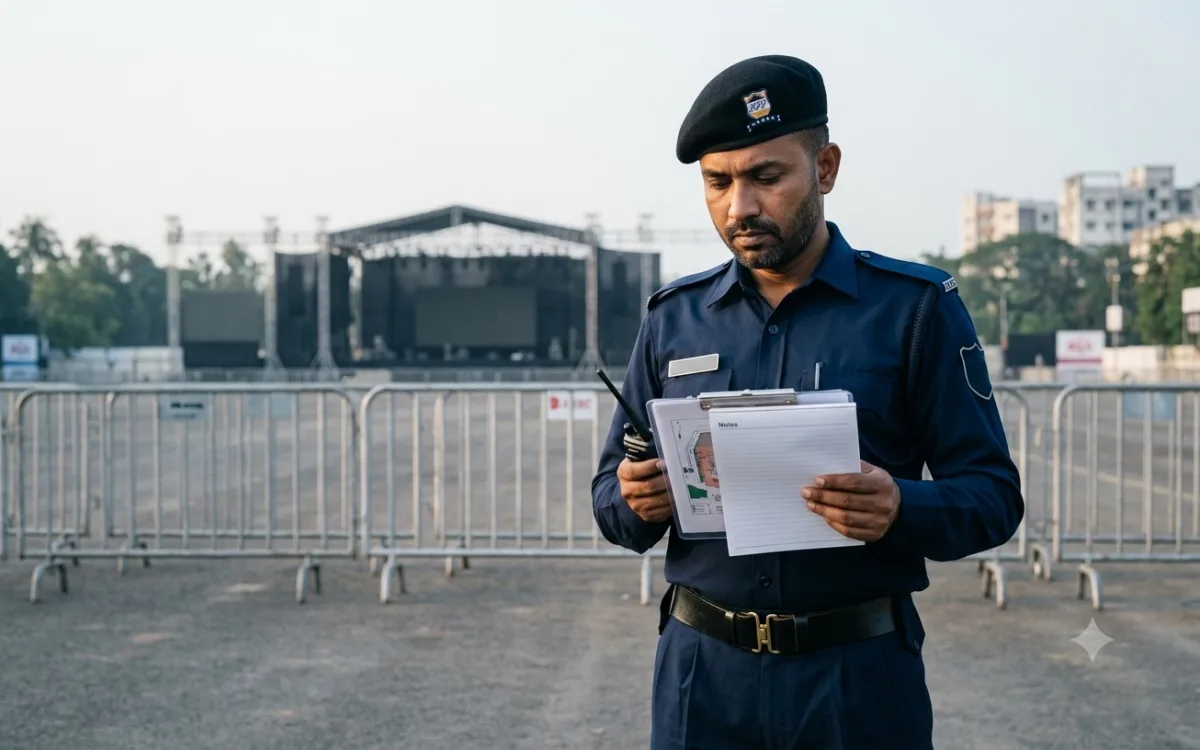
Every event failure we have been called to review traces back to a decision - or a non-decision - made weeks earlier. Here is the timeline our teams work to.
T-30 days: assessment
Confirm expected footfall and demographic. Walk the venue. Map entries, exits, fire lanes, medical points and the command post location. Identify the threat profile honestly - a corporate awards night and a college fest are not the same job.
T-21 days: the deployment plan
Convert the map into a post chart: how many personnel, where, on what shift, reporting to whom. Fix the supervisor ratio at roughly one per ten personnel. Decide armed versus unarmed and confirm licences.
T-14 days: authorities and accreditation
File police intimation. Confirm fire NOC and ambulance standby. Finalise the pass design with tiered access colours and hand the artwork to printing with a serial-number scheme.
T-7 days: briefing pack
Issue written post instructions to every position. Circulate the escalation matrix with names and live numbers. Confirm radio channels and distribute handsets with spare batteries.
T-1 day: rehearsal
Physical walkthrough with all supervisors. Run the K9 sweep. Test every metal detector and radio. Confirm the medical team knows the fastest route out.
Gate day
Personnel on site three hours before doors. Final briefing 90 minutes prior. Command post live before the first guest arrives, and it stays live until the last vehicle has left the lot - the exit is where most incidents actually happen.